You want a smile you feel good about. That much is simple. The hard part is picking the right path to get there. Two names come up again and again in that search: Invisalign and veneers. Both can change how your smile looks. Both work in very different ways.
If you have been comparing Invisalign in Enid with veneers, you are not alone. Patients ask us this question almost every week. Some want straighter teeth. Some want whiter, more even teeth. Some want both. This guide breaks down what each option actually does, who it fits best, and how to think through the decision without guessing.
What Invisalign Actually Does
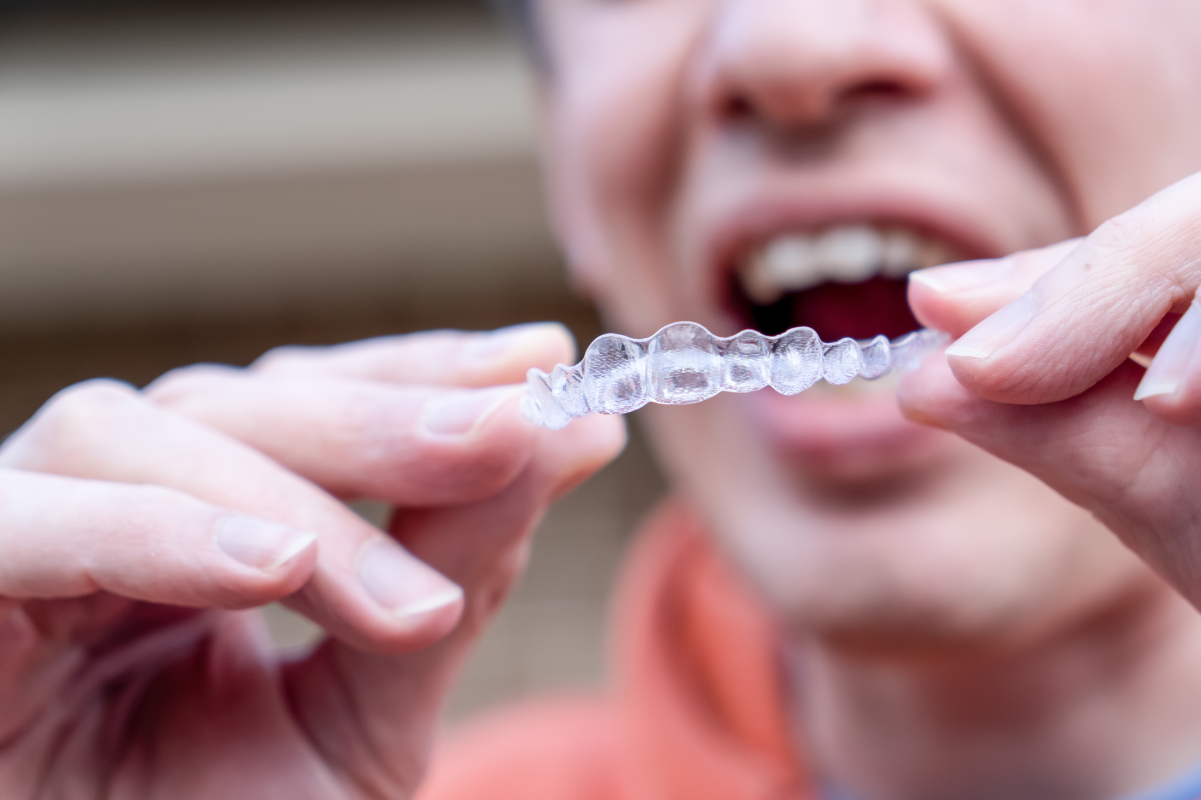
Invisalign uses a series of clear, custom-made trays to move your teeth into a better position over time. You wear each tray for one to two weeks, then switch to the next one in the series. Slowly, your bite shifts. Crowded teeth spread out. Gaps close. Your bite lines up the way it should.
This is a treatment, not a cover-up. It changes the actual position of your teeth. That matters because it can fix real problems, not just hide them. Crooked teeth, an overbite, a crossbite, or teeth that have shifted with age can all respond to this kind of guided movement.
Invisalign trays are clear and removable. You take them out to eat, brush, and floss. Most adults find this fits easily into a normal day. Coworkers and friends often do not notice you are wearing them at all.
What Veneers Actually Do
Veneers work differently. A veneer is a thin shell, usually made of porcelain, that bonds to the front surface of a tooth. It does not move your teeth. It covers them.
This makes veneers a strong choice for cosmetic changes. If your teeth are already in a fairly good position but you want a whiter, more uniform look, veneers can deliver that fast. They also hide small chips, stains that will not respond to whitening, and minor gaps between front teeth.
The tradeoff is that veneers usually require some enamel to be shaved down so the shell fits and looks natural. That step cannot be reversed. Veneers also do not fix bite problems. If your teeth are crowded or your jaw does not line up correctly, a veneer will sit on top of that problem rather than solve it.
Invisalign vs Veneers: A Side-by-Side Look
| Feature | Invisalign | Veneers |
| What it changes | Tooth position and bite alignment | Tooth color, shape, and surface appearance |
| Treatment time | Around 12 to 18 months on average | Often completed in two to three visits |
| Reversible? | Yes, teeth can be retained in their new position | No, enamel removal is permanent |
| Best for | Crowding, gaps, bite issues, mild to moderate misalignment | Stains, chips, uneven edges, minor spacing |
| Daily care | Removable for eating and brushing | Brush and floss like natural teeth |
| Long-term upkeep | Retainer wear after treatment | Replacement every 10 to 15 years typically |
This chart is a starting point, not a final answer. Your mouth is not a chart. A real exam tells you far more than a table ever will.
How to Know Which One Actually Fits You
Ask yourself a few honest questions. Are your teeth mostly straight, but the color or shape bothers you? Veneers might be the shorter path. Are your teeth crowded, gapped, or your bite feels off when you chew? That points toward Invisalign.
Some patients need both, in stages. Straighten first with Invisalign in Enid, then consider cosmetic touches like whitening or bonding once the bite is correct. Skipping straight to veneers on a misaligned bite can create problems later, since the shells still have to sit on teeth that are not lined up correctly.
This is exactly the kind of decision that benefits from a real conversation with an orthodontist in Enid who can look at your teeth, your bite, and your goals together. A quick online quiz cannot replace a set of digital scans and a trained eye.
Age and lifestyle matter too. Teens and adults respond to Invisalign differently, since jaw growth in teens can speed up movement. Adults with busy schedules often like that they can remove the trays for meetings, meals, and workouts. If you play contact sports or grind your teeth at night, that is also worth mentioning during your exam, since it can shape which option your orthodontist recommends first.
Know Your Orthodontist
Dr. Scott Schuessler leads the team at Schuessler Orthodontics. His path into dentistry was not a straight line, and that background shapes how he treats patients today.
He first earned a degree in Chemical Engineering from Oklahoma State University. He spent three years working in that field with Dow Chemical and Conoco before deciding to pursue dentistry instead. He went on to graduate from the University of Oklahoma College of Dentistry, then spent six years practicing as a general dentist in Edmond, with a focus on cosmetic dentistry. That cosmetic background gives him a sharp eye for how a smile should look, not just how teeth should line up.
Dr. Schuessler later completed orthodontic training at Vanderbilt, where he also studied under a TMJ specialist. That training carried into his own practice. Beyond straightening teeth, he treats patients dealing with jaw popping, headaches, and muscle tightness tied to TMJ issues, often without surgery or medication.
That engineering background, cosmetic dentistry experience, and orthodontic training combine into a practical, detail-focused approach. Patients get a plan built around how their teeth function and how their smile looks, not just one or the other.
A Note From a Patient
Reviews on the practice’s Google Business Profile echo this same theme again and again. One patient shared a story that captures the full arc of a great visit well. One recent Google review sums up why this level of care matters:
“Great customer service and great treatment plan! Dr Schuessler is very experienced in his field and will provide a treatment plan that is based on what is best for the patient. 1,000% recommend!!!” ★★★★★ (Jesse Brown)
You can read more patient reviews on our Google Business Profile.
That kind of clear, unhurried explanation is what turns a hard decision, like choosing between Invisalign and veneers, into a simple one.
Local Care Across Enid, Stillwater, and Ponca City
Schuessler Orthodontics serves patients across Enid, Stillwater, and Ponca City, Oklahoma. Each office offers the same range of services, from early treatment for kids to full adult orthodontic care, so you can get consistent treatment no matter which location is closest to home or work.
For patients searching for Invisalign in Enid, the local office offers digital scans instead of messy impressions, a custom 3D plan so you can see how your teeth will move before you start, and check-ins every six to eight weeks to track progress. This same team-based approach applies at every location, so families with members at different offices still get treatment that feels connected and consistent.
An orthodontist in Enid who understands both cosmetic dentistry and structural alignment can walk you through Invisalign, veneers, or a combination plan built around your actual mouth, not a generic recommendation.
Cost and Insurance Considerations
Cost is often the deciding factor for many patients, and it is worth discussing early rather than after you have already picked a treatment. Invisalign pricing typically depends on how complex your case is and how long treatment will run. Veneers are usually priced per tooth, so the total cost depends on how many teeth you plan to cover.
Many dental insurance plans offer partial coverage for Invisalign, since it is classified as orthodontic treatment. Veneers, since they are cosmetic, are less often covered. Flexible financing options and payment plans can make either option more manageable, and a consultation is the best way to get real numbers instead of rough estimates.
It also helps to think about upkeep costs over time. Aligners require a retainer after treatment ends, and that retainer needs occasional replacement if it wears out or gets lost. Veneers hold up well with normal brushing and flossing, but chipping one from biting something hard can mean an extra repair visit. Neither option is maintenance free, so it helps to plan for small costs down the road, not just the upfront price.
Frequently Asked Questions
1. Can I get both Invisalign and veneers?
Yes. Many patients straighten their teeth first, then add veneers afterward for a final cosmetic touch. Doing it in that order usually gives better, longer-lasting results.
2. How long does treatment usually take?
Invisalign treatment often runs 12 to 18 months, though simple cases can finish sooner. Veneers can often be completed within a few visits over a few weeks.
3. Does either option hurt?
Clear aligners may feel snug for a day or two after each new set. Veneer preparation involves numbing, so discomfort during the procedure is minimal. Some tooth sensitivity afterward is normal and usually fades.
4. Will insurance help pay for these treatments?
Orthodontic coverage for aligners varies by plan, but many policies help offset part of the cost. Veneers are typically considered cosmetic and are less likely to be covered.
5. Can veneers fix crooked teeth?
Veneers can make teeth appear more even, but they do not correct an underlying bite problem. For real misalignment, straightening treatment is the better long-term fix.
6. How do I clean and care for aligners?
Rinse them each time you remove them, brush them gently with a soft toothbrush, and avoid hot water, which can warp the plastic.
7. Are veneers permanent?
They are considered permanent because a thin layer of enamel is removed to fit them. They typically last 10 to 15 years and need replacement eventually.
8. What is the first step if I am not sure which option is right for me?
Book a consultation. A trained orthodontist can examine your teeth, discuss your goals, and recommend a plan built around your specific situation rather than guesswork.
Making Your Decision
There is no single right answer between Invisalign and veneers. The right choice depends on what your teeth actually need and what result you are picturing for yourself. If your bite or alignment is the issue, Invisalign addresses the root problem by moving your teeth into place. If your teeth are already positioned well and you simply want a brighter, more even look, veneers may get you there faster.
The best next step is a real conversation, not another article. Schuessler Orthodontics has served families across Enid, Stillwater, and Ponca City for years, and a trusted orthodontist in Enid can help you compare both paths side by side using your own teeth and your own goals.
If you are ready to find out which option fits your smile, reach out to Schuessler Orthodontics to schedule a consultation. Their team will walk you through your options for Invisalign in Enid, answer your questions about veneers, and help you choose the path that fits your life, your budget, and the smile you actually want.